2026-11-07 ·
Why Your Basement Floor Drain Backs Up After Rain in Lorain
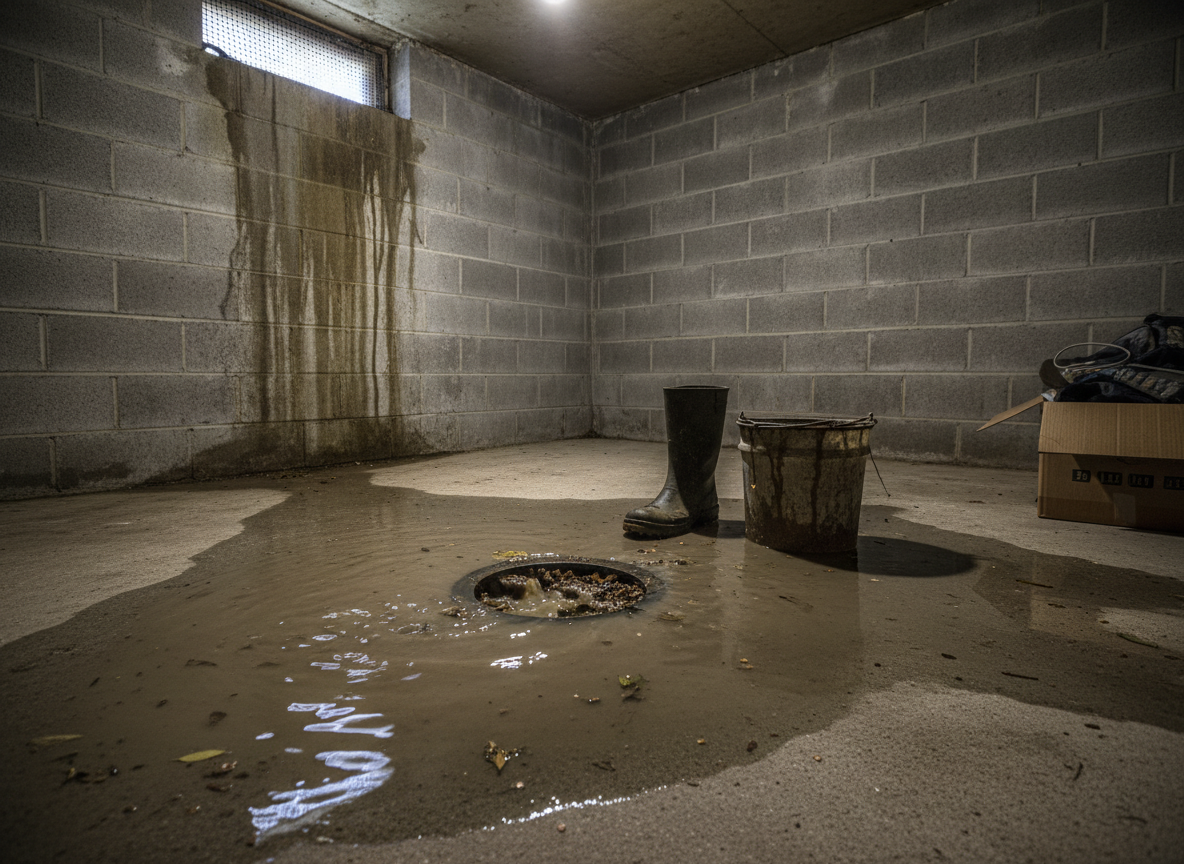
In Lorain, basement floor drains back up after rain because lake-effect storms send excess water into clay laterals already restricted by tree roots and sediment buildup common throughout Lorain County.
Clay Laterals and Local Soil Conditions
Many homes in Downtown Lorain, South Lorain, and Lakeview still rely on clay sewer laterals installed decades ago. These pipes sit in heavy clay soil that expands and contracts with moisture changes, creating joints that separate over time. Once gaps form, tree roots from maples and oaks along residential streets enter and expand, narrowing the pipe diameter. When rain falls, especially during intense lake-effect events near the Black River and Lorain Harbor, the restricted laterals cannot carry the increased flow. Water then reverses direction and surfaces through the lowest point, which is often the basement floor drain. Homeowners can inspect visible cleanout caps near the foundation for standing water or slow drainage as an early sign of restriction.
Impact of Lake-Effect Precipitation
Lorain County receives frequent heavy downpours tied to its proximity to Lake Erie, with snow and rain totals often exceeding surrounding inland areas. These events overload the combined storm and sanitary systems that serve older blocks around the Lorain Palace Theatre and nearby commercial corridors. When surface water enters through yard drains or foundation cracks, the main line cannot keep pace with the added volume. The result is a hydraulic backup that forces wastewater upward through floor drains. Checking gutters and downspouts for clear discharge away from the foundation helps reduce the load during these storms. Properties near the harbor area see this pattern more often because older infrastructure was not designed for today’s rainfall intensity.
Tree Roots and Seasonal Patterns
Tree roots remain active in Lorain’s humid continental climate even after leaf drop, seeking moisture inside clay pipes year-round. Roots enter through small joints and grow rapidly once they reach the nutrient-rich environment inside the line. After prolonged rain, the saturated soil pushes additional root mass into the pipe while simultaneously increasing water volume. This combination creates sudden backups that appear only during wet weather. Tree Roots in Old Clay Sewer Lines: What Lorain Homeowners Should Know explains how these intrusions develop specifically in local clay laterals. A sewer camera inspection can reveal the exact location and extent of root intrusion without excavation.
Practical Homeowner Checks
Start by observing the floor drain during the next moderate rain: note whether water rises slowly or surges. Clear the drain grate of debris and pour a bucket of water to test flow when skies are dry. Walk the yard to locate the cleanout access point and check for odors or moisture after storms. Note any recent tree planting or sidewalk repairs near the sewer path, as these often disturb roots. If backups occur repeatedly, schedule basement floor drain cleaning to remove accumulated roots and scale before the next lake-effect event. Documenting the timing and severity of each incident helps identify whether the issue lies in the lateral or further downstream in the main line.
When to Consider Further Service
Persistent wet-weather backups usually point to partial blockages that simple plunging cannot resolve. Main sewer line cleaning can restore capacity in lines affected by both roots and sediment. In some cases, hydro jetting breaks apart compacted material that snaking alone leaves behind, which is detailed in Hydro Jetting vs Snaking: Which Does Your Drain Need. Homeowners in Elyria and surrounding Lorain County communities report similar patterns, confirming that the combination of clay pipe age and regional weather is widespread. Regular monitoring of drainage speed after rain remains the most reliable way to catch developing restrictions early.