2026-11-07 ·
Kitchen Grease Clogs and How to Prevent Them
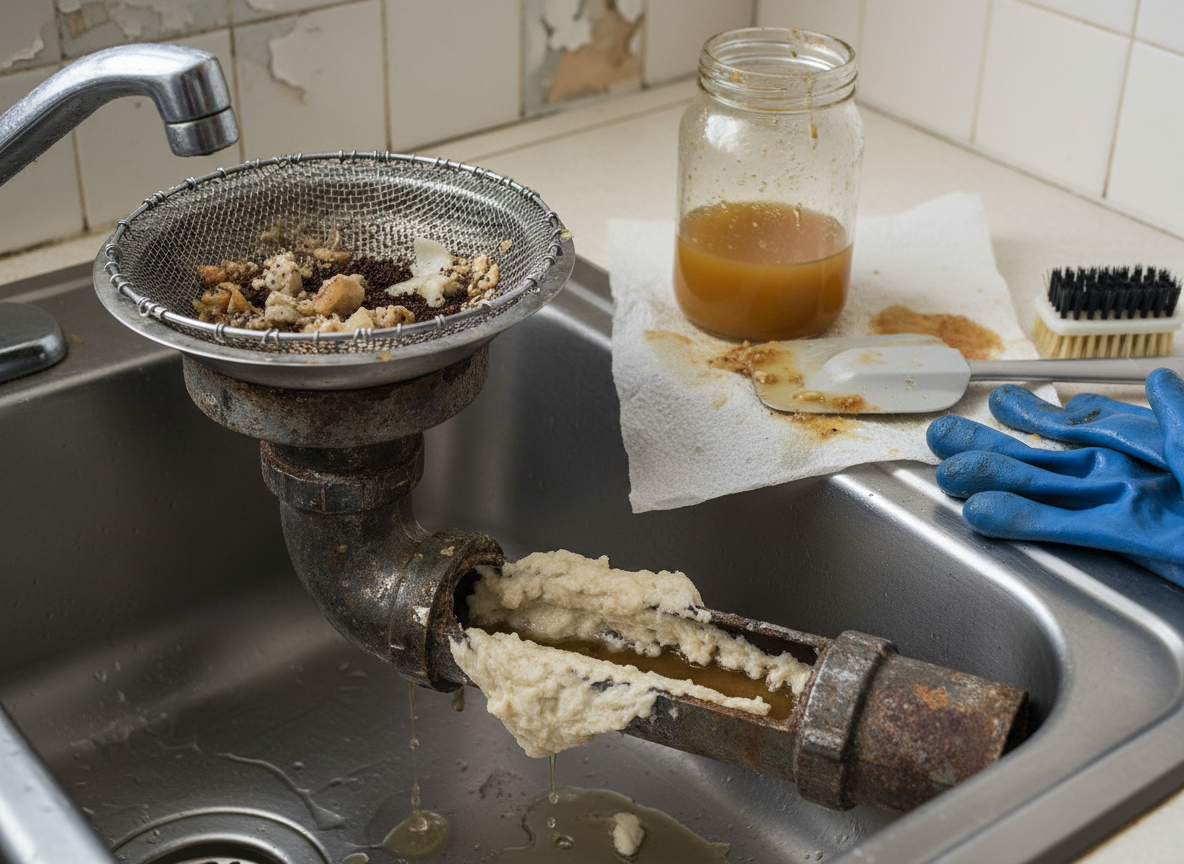
Kitchen grease clogs form when fats, oils, and food particles cool and harden inside drain pipes, restricting water flow over time. In Lorain County homes this process accelerates because many properties still rely on clay laterals that offer rough surfaces for buildup to cling. Lake-effect snow keeps families indoors more during winter, increasing cooking and the volume of grease sent down kitchen sinks. The result shows up first as slow drainage, then complete backups that reach into basements common across South Lorain and Lakeview neighborhoods.
How Grease Interacts with Local Plumbing
Lorain’s humid continental climate brings cold winters that chill pipes running under slabs and through basements, causing grease to solidify faster than in milder regions. Clay laterals installed decades ago in Downtown Lorain and along the Black River corridor have joints and rough interiors that trap particles even when homeowners run hot water afterward. Once a layer of grease coats the pipe wall, additional debris sticks quickly, narrowing the diameter until only a trickle passes. Tree roots seeking moisture near the Black River and Lorain Harbor can also penetrate these lines, creating perfect spots for grease to collect further. Regular observation of how quickly water leaves the sink after washing dishes helps catch the problem before it reaches the main sewer line.
Daily Habits That Limit Grease Entry
Pouring cooled grease into a sealed container instead of the sink keeps the majority of fats out of the plumbing from the start. Wiping pans with a paper towel before washing removes the thin film that would otherwise rinse into the drain. Installing a mesh strainer over the kitchen sink catches food bits that combine with any remaining grease to form larger masses. Running a full sink of hot water for thirty seconds after each meal helps move lighter residues farther downstream before they cool. These steps work together in Lorain homes where older clay laterals already present more resistance than modern PVC lines. Over months the reduced volume of grease reaching the pipes noticeably lowers the chance of a sudden backup during peak cooking periods.
Seasonal Checks for Lorain Homeowners
Before lake-effect snow arrives, inspect the area under the kitchen sink for any dampness or slow drips that could signal early narrowing. During heavy snow months, when more meals are prepared at home, flush the line weekly with a kettle of boiling water followed by a cup of baking soda to break down light accumulations. After spring thaw, watch for gurgling sounds at the basement floor drain, which often shares the same lateral as the kitchen sink in many Lorain County properties. If water backs up only in the kitchen during heavy rains, the issue may connect to the main sewer line rather than a localized grease plug. Homeowners in Amherst and Sheffield Lake report similar patterns tied to shared clay infrastructure installed before modern separation standards.
Professional Options When Prevention Falls Short
When slow drainage persists despite daily habits, kitchen sink drain cleaning removes the hardened layer without replacing the line. For older homes where grease has combined with root intrusion, hydro jetting scours the interior walls more thoroughly than mechanical methods. Comparing these approaches in advance helps residents decide between targeted clearing and full restoration, as outlined in the guide Hydro Jetting vs Snaking: Which Does Your Drain Need. A sewer camera inspection reveals exactly where grease has collected along the clay lateral before any equipment enters the pipe. These services allow Lorain homeowners to address the specific conditions created by local soil, climate, and aging infrastructure rather than guessing at the cause.