2026-11-07 ·
Tree Roots in Old Clay Sewer Lines: What Lorain Homeowners Should Know
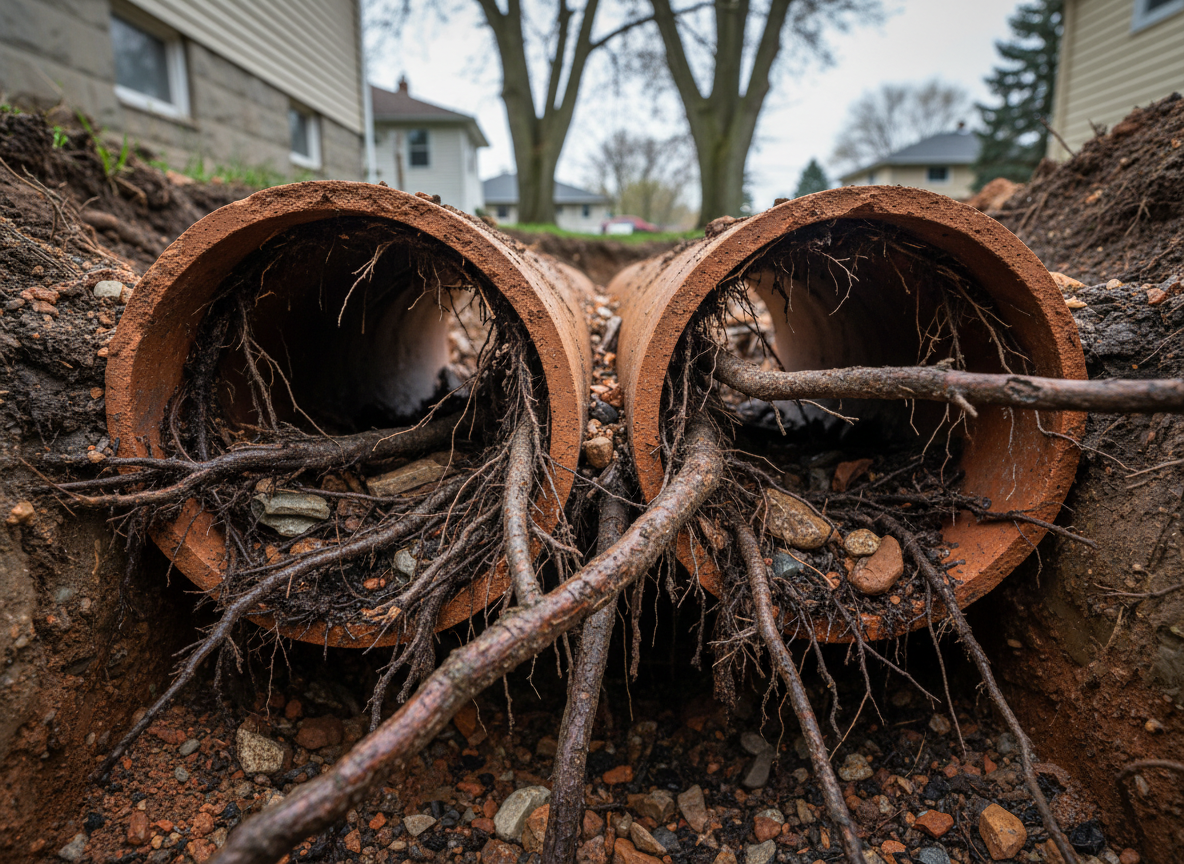
In Lorain County, tree roots reach old clay sewer lines in 8 to 20 years once nearby trees mature and seek steady moisture sources, particularly in basements connected to clay laterals under streets in South Lorain and Lakeview.
Clay Laterals and Local Soil Conditions
Clay pipe sections installed decades ago in Lorain County neighborhoods run from homes to main lines under streets near the Black River and Lorain Harbor. These pipes develop hairline cracks from shifting soil during freeze-thaw cycles tied to lake-effect snow. Roots from maples and oaks common around Downtown Lorain and the Lorain Palace Theatre area follow the moisture trail through those cracks. Once inside, roots expand and trap debris, narrowing flow. Homeowners in older blocks often see the first issues after heavy spring rains when the ground stays saturated longer than in drier inland counties.
How Roots Reach and Block Lines
Mature trees planted 20 to 40 feet from foundations send feeder roots toward the consistent water in sewer laterals. In Lorain's humid continental climate, summer dry spells followed by lake-effect snow in winter drive roots deeper in search of reliable moisture. Clay joints that once sealed well separate over time from ground movement, creating entry points. Roots then grow into thick mats that catch toilet paper and grease, leading to recurring slow drains. Properties near Lakeview with larger yards and older plantings face higher exposure because root systems have had more decades to spread toward the pipes.
Early Checks Homeowners Can Perform
Walk the yard after rain and note any soft spots or new sinkholes above the sewer path. Check basement floor drains for gurgling sounds when toilets flush or showers run. Observe whether multiple fixtures back up at once, which points to the main lateral rather than a single fixture clog. In neighborhoods around the Black River, roots often concentrate near sidewalk trees. These checks help flag problems before a full backup reaches the basement floor. Sewer camera inspection reveals the exact location and extent of root growth without excavation.
Cleaning and Removal Approaches
Tree root removal combined with main sewer line cleaning clears current growth while hydro jetting cuts remaining roots and scours pipe walls. For lines with repeated root issues, periodic camera checks track regrowth rates. Homeowners in Amherst and Sheffield Lake often schedule service after winter snowmelt when roots become most active. Hydro jetting vs snaking: which does your drain need explains why cutting roots without full removal allows faster return of the same problem.
Reducing Future Root Pressure
Plant new trees at least 30 feet from known lateral routes and choose slower-growing species with less aggressive roots. Keep existing trees pruned so they do not seek extra water during dry spells. Monitor downspout discharge points so roof water does not pool directly above sewer lines. In Lorain County, addressing small root intrusions early prevents the larger backups that affect homes after extended lake-effect snow seasons. Regular visual checks and timely service keep clay laterals flowing despite the local soil and tree conditions.